

How to Find Local Medical Centers Offering On-Site Endoscopy and Infusion for Research Patients
If you have been diagnosed with a gastrointestinal condition and want access to cutting-edge treatments before they reach the market, finding a clinical research site with on-site endoscopy and infusion capabilities is a critical first step. Not every research center can perform these procedures in-house, which means patients often face extra appointments, travel, and delays. This guide walks you through exactly how to identify, evaluate, and connect with medical centers that keep endoscopic and infusion services under one roof, so your trial experience is as seamless as possible.
Why On-Site Endoscopy and Infusion Matter for Research Patients
Many GI clinical trials require periodic endoscopic assessments to measure mucosal healing or disease activity. Others involve biologic infusions administered intravenously every few weeks. When these services exist at the same location where your research visits take place, you avoid the hassle of coordinating between multiple facilities.
On-site capabilities also improve data quality. Investigators who perform endoscopy and manage infusions in their own clinic can monitor adverse events in real time, adjust dosing quickly, and keep study timelines on track. For patients, this translates to fewer visits and a single care team that knows your full history.
What Are On-Site Endoscopy and Infusion Services?
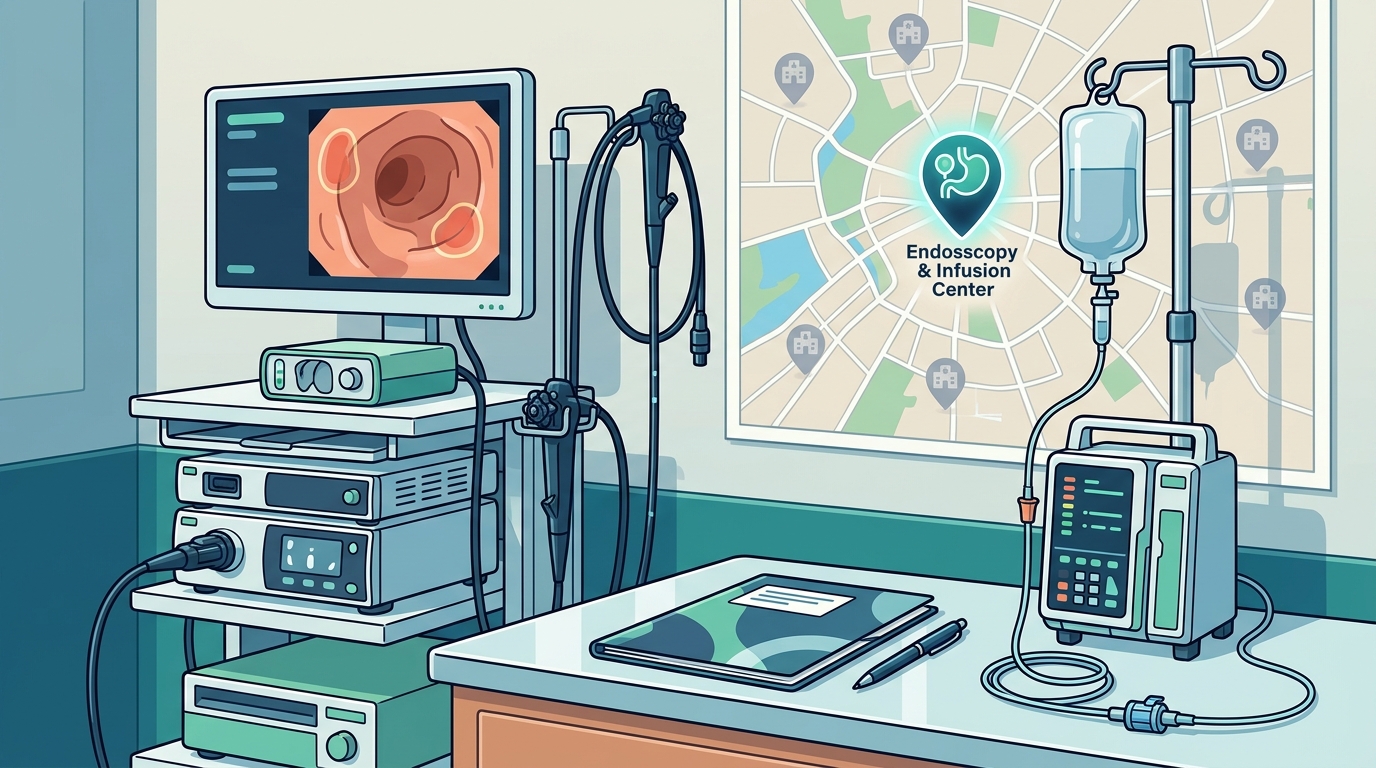
On-site endoscopy is the ability to perform diagnostic or therapeutic endoscopic procedures, such as colonoscopy or upper endoscopy, within the research facility itself rather than at a separate hospital. On-site infusion is the administration of intravenous medications, including biologic therapies, at the same clinical location where trial visits occur. A clinical trial is a research study that tests new treatments or therapies to determine their safety and effectiveness.
Centers like Encore Borland Groover Clinical Research (EBGCR) in Northeast Florida combine both capabilities. Their research group provides radiologic, endoscopic, and infusion services on-site at the research facility, which streamlines the trial process for participants.
Step-by-Step: How to Find the Right Research Center
1. Search Public Trial Registries
Start with ClinicalTrials.gov, the federally maintained registry of publicly and privately funded clinical studies. You can filter results by condition, location, and study status. Each listing includes site contact details so you can ask directly whether endoscopy and infusion are available on-site.
2. Contact Specialized GI Research Networks
Research networks that focus on gastroenterology are more likely to have endoscopy suites built into their facilities. EBGCR, for example, was formed in 2019 when ENCORE Research Group and Borland Groover Division of Research joined forces specifically to maximize clinical trial opportunities for community patients. Look for similar partnerships between large GI practices and dedicated research organizations.
3. Ask Your Gastroenterologist
Your treating physician often has direct relationships with nearby research sites. Ask whether they serve as a principal investigator or can refer you to one. Board-certified gastroenterologists who also lead trials can offer continuity of care from diagnosis through study participation.
Key Features to Look for in a Research Site
Not all clinical research facilities are equal. Here are the features that distinguish top-tier sites:
- Integrated procedures: Endoscopy suites and infusion chairs co-located with research coordinators.
- Experienced investigators: Physicians with track records in Phase I through Phase III trials and publications in peer-reviewed journals.
- IRB compliance: Ability to work with both central and local Institutional Review Boards.
- Dedicated support staff: Research coordinators, phlebotomists, and nurses trained in Good Clinical Practice (GCP).
- Patient volume: Sites that care for large patient populations can recruit efficiently and maintain study momentum. EBGCR investigators, for instance, provide care for more than 100,000 patients each year with digestive disorders.
Comparing Research Site Models
| Feature | Integrated GI Research Center | Hospital-Based Research Program | Standalone Research Clinic |
|---|---|---|---|
| On-site endoscopy | Yes | Usually yes | Rarely |
| On-site infusion | Yes | Usually yes | Sometimes |
| Dedicated research coordinators | Yes | Shared with clinical duties | Yes |
| Speed of enrollment | Fast (large patient base) | Moderate | Variable |
| Patient travel burden | Low (single location) | Low to moderate | High (may need outside referrals) |
| IRB flexibility | Central and local | Institutional only | Central only |
An integrated GI research center like EBGCR offers the widest range of in-house services, including radiologic, endoscopic, and infusion capabilities under one roof. This model reduces patient burden and improves data collection consistency.
The Role of IRB Oversight in Choosing a Site
An Institutional Review Board (IRB) is an independent committee of physicians, statisticians, and community advocates that ensures a clinical trial is ethical and that participant rights are protected. Every clinical trial in the United States must be approved and periodically reviewed by an IRB before enrollment can begin.
When evaluating a research center, confirm that it works with a recognized IRB. Sites that accept both central and local IRBs give sponsors greater flexibility and often onboard studies faster. You can learn more about how EBGCR approaches IRB oversight and GI clinical research on their about page.
Key Takeaways
- On-site endoscopy and infusion eliminate the need to coordinate care across multiple facilities.
- ClinicalTrials.gov is the best starting point for finding registered studies and their locations.
- Integrated GI research centers that partner large practices with research organizations offer the most comprehensive patient experience.
- Always verify IRB approval and investigator credentials before enrolling.
- Your gastroenterologist can be your best referral source for nearby research sites.
- Sites caring for large patient populations, like EBGCR with over 100,000 GI patients annually, tend to run trials more efficiently.
- Look for staff trained in Good Clinical Practice to ensure safety and compliance.
Frequently Asked Questions
What does on-site endoscopy mean for clinical trial patients?
It means the research facility has its own endoscopy suite, so procedures like colonoscopy or upper endoscopy required by the study protocol can be performed at the same location as your regular trial visits. This saves time and keeps your care team consistent.
Why is on-site infusion important in a clinical trial?
Many GI trials test biologic therapies delivered by IV infusion. When infusion services are on-site, nurses and investigators can monitor you during and after the infusion, quickly address any reactions, and document outcomes in real time for the study.
How do I know if a research site is legitimate?
Check that the site is listed on ClinicalTrials.gov, has IRB approval, and employs board-certified investigators. You can also ask for the study's informed consent document, which will outline risks, benefits, and oversight details.
Can I participate in a GI clinical trial if I do not live near a research center?
Some trials offer travel compensation. Sites like EBGCR are located in accessible metropolitan areas such as Jacksonville, Florida, and some trials may include virtual follow-up visits to reduce travel. Ask the research coordinator about logistics before committing.
What conditions are commonly studied at centers with endoscopy and infusion?
Common conditions include Crohn's disease, ulcerative colitis, eosinophilic esophagitis, non-erosive gastroesophageal reflux disease (NERD), and liver diseases. Centers with infusion capabilities frequently study biologic and biosimilar therapies for inflammatory bowel disease.
Is there any cost to participate in a clinical trial?
In most cases, the study sponsor covers the cost of the investigational treatment and study-related procedures. Some trials also offer compensation for your time and travel expenses. Details are provided during the screening and consent process.
What qualifications should a principal investigator have?
Look for physicians who are board-certified in their specialty, have published research in peer-reviewed journals, and have served as principal investigators on Phase I through Phase III trials. You can review investigator profiles on research site websites to verify credentials.
How long does a typical GI clinical trial last?
Duration varies widely. Some studies run 12 weeks; others extend beyond a year. Trials involving biologic infusions often include a maintenance phase with visits every 4 to 8 weeks. The informed consent form will outline the full timeline before you agree to participate.
Get Started Today
Finding a research center with on-site endoscopy and infusion does not have to be complicated. If you or a loved one has a gastrointestinal condition and you want early access to promising new therapies, explore the currently enrolling clinical trials at EBGCR. Their integrated facility in Jacksonville, Florida, offers endoscopic, infusion, and radiologic services all in one place. Contact their research team today to learn which studies match your condition.